
Logo RUB
  • Home
  • Members
    • Structure
      • MRD Scientists
      • MRD Speakers
      • MRD Board
      • MRD Alumni
    • Early Career Researchers
      • ECR Scientists
      • ECR Representatives
  • Research
    • Research at MRD
      • Publications
      • Fields of Expertise
      • Research Projects
      • Meet our Researchers
    • Partners
      • ZGH
      • Incubator Materials
      • Materials Chain
      • National Partnerships
      • International Partnerships
  • News & Events
    • News
      • RUB News
      • MRD News
      • Newsletter Archive
    • Events
      • Talks & Seminars
      • Conferences
      • ECR Events
      • MRD Innovation Day
  • Education
    • Studying Materials Science at RUB
      • B.Sc. Study Programs
      • M.Sc. Study Programs
      • Doctoral Programs
    • International Lectures
      • Summer term 2023
      • Winter term 2022/2023
      • Archive – Teaching
  • Contact
 
Materials Research Department
MENÜ
  • RUB-STARTSEITE
  • Home
  • Members
    • Structure
    • Early Career Researchers
  • Research
    • Research at MRD
    • Partners
  • News & Events
    • News
    • Events
  • Education
    • Studying Materials Science at RUB
    • International Lectures
  • Contact
Home » Current activities » News » RUB News » RUB News Details

- Ruhr-Universität Bochum
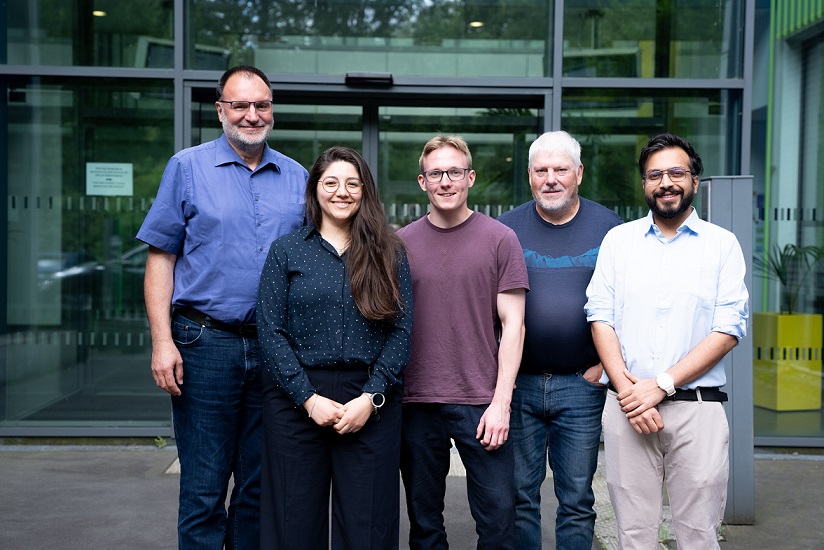
The authors of the paper (from left): Martin Muhler, Catalina Leiva-Leroy, Julius Ponhöfer, Wolfgang Schuhmann and Adarsh Koul
Chemistry

A more sustainable method for alcohol oxidation

By combining thermal and electrocatalytic methods, alcohol oxidation can be precisely controlled and made more energy-efficient.

Researchers at Ruhr University Bochum have developed a new method that makes the oxidation of alcohols more controllable and sustainable. Alcohol oxidation is important for both synthetic chemistry and sustainable energy applications Thermal processes are typically used for this purpose; the activation energy required for the reaction is thus supplied in the form of heat and the oxidation is carried out using oxygen under pressure. In collaboration with the Max Planck Institute for Coal Research in Mülheim, the Bochum team has now combined this approach with an electrocatalytic process that uses electricity from sustainable sources as an additional driving force.

Read original article

back
Published
July 9th, 2026
Author
Julia Weiler
Logo RUB
Ruhr-Universität Bochum
Universitätsstraße 150
44801 Bochum

SOCIAL MEDIA

  • LinkedIn
Seitenanfang Kontrast N
  • LinkedIn